
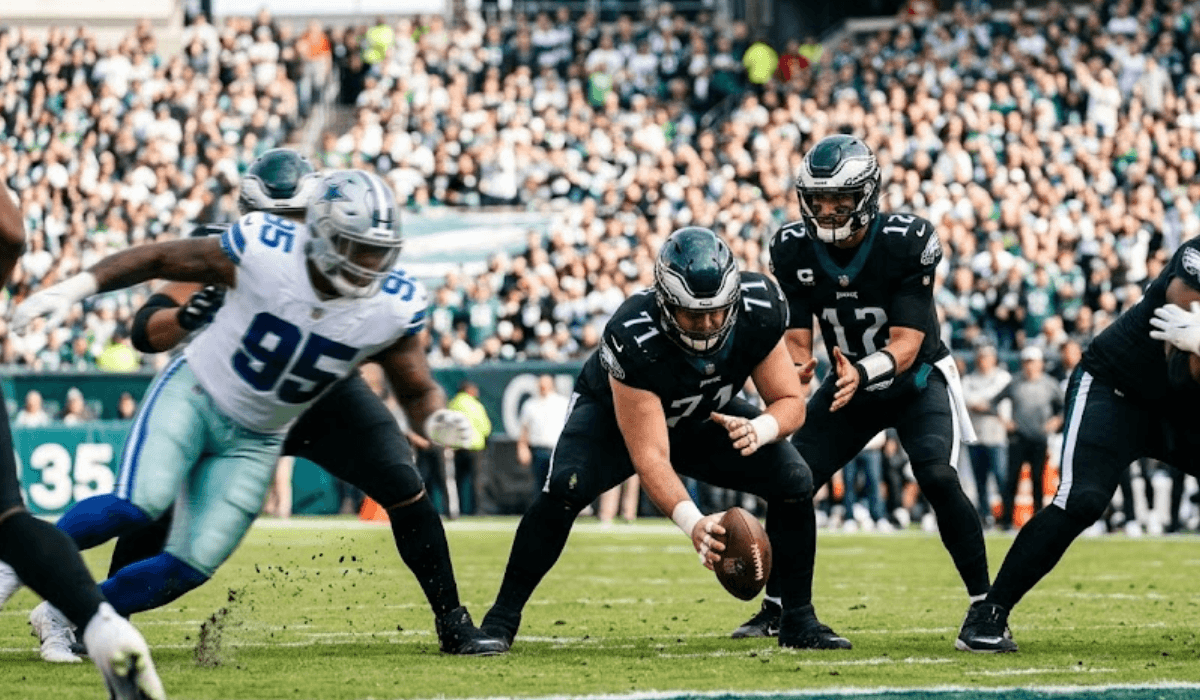
The straight answer: each NFL team plays 17 regular season games over 18 weeks, with one bye week built in. Across the entire league, that means 272 regular season games total.
But the full season is more complicated than that. Add in the preseason, the playoffs, and the Super Bowl, and a team that goes all the way from August to February could play as many as 21 games in a single season. Here is the complete breakdown.
The Regular Season: 17 Games, 18 Weeks
The regular season starts the second week of September and runs through early January — 18 weeks of football with every team sitting out one week (their bye week) during that stretch.
17 games per team × 32 teams ÷ 2 (each game involves 2 teams) = 272 total regular season games.
The 17-game schedule is actually relatively new. For 50 years — from 1978 through 2020 — the NFL regular season was 16 games over 17 weeks. The NFL expanded to 17 games starting in the 2021 season as part of the new Collective Bargaining Agreement signed in 2020. The 17th game is an interconference matchup determined by prior year standings.
The question that comes up every few years is whether the NFL will go to 18 regular season games. The NFL Players Association has been resistant, primarily over injury concerns and workload. As of 2026, the schedule remains at 17 games per team.
The Preseason: 3 Games Per Team (Plus the Hall of Fame Game)
Before the regular season, every team plays a preseason schedule. In 2026 that means:
- 3 preseason games per team for 30 of the 32 teams
- 4 preseason games for the Arizona Cardinals and Carolina Panthers, who participate in the Hall of Fame Game on August 6
Preseason games do not count in the standings. They are used for roster evaluation, scheme installation, and preparing players for live game speed before the regular season begins. Starters typically play limited snaps in preseason, with more playing time going to players fighting for roster spots.
The 2026 preseason schedule:
- Hall of Fame Game: August 6 (Cardinals vs. Panthers)
- Preseason Week 1: August 13–15
- Preseason Week 2: August 20–23
- Preseason Week 3: August 27–29
The Playoffs: Up to 4 More Games
After the regular season, 14 teams qualify for the NFL playoffs. Depending on how far a team advances, they play between 1 and 4 additional games.
| Round | Games |
|---|---|
| Wild Card Weekend | 6 games (12 teams play, 2 have a bye) |
| Divisional Round | 4 games |
| Conference Championships | 2 games |
| Super Bowl | 1 game |
Total playoff games per season: 13 (not counting the Super Bowl as a separate count — 11 rounds games plus 1 conference championship per conference plus the Super Bowl)
A team that earns the No. 1 seed (and the first-round bye) and wins the Super Bowl plays exactly 3 playoff games. A team seeded No. 2 through 7 that wins the Super Bowl plays 4 playoff games.
See also: 2026-2027 NFL Schedule
Maximum Games a Single Team Can Play in One Season
Here is the absolute maximum number of games an NFL team can play in one calendar season:
| Phase | Games |
|---|---|
| Preseason | 3 (or 4 for HOF Game participants) |
| Regular Season | 17 |
| Wild Card | 1 (if not the No. 1 seed) |
| Divisional Round | 1 |
| Conference Championship | 1 |
| Super Bowl | 1 |
| Total maximum | 24 (HOF participants) / 23 (everyone else) |
In practice, for most Super Bowl champions the count is 17 regular season + 3 playoff games = 20 games. For a team like the Cardinals or Panthers in 2026, who play a fourth preseason game, the maximum is 21 games if they win the Super Bowl.
How the 17-Game Schedule Changed the NFL
When the NFL went from 16 to 17 games in 2021, several things changed:
Scheduling: The 17th game is always an interconference matchup. Teams from the AFC play an extra NFC game (and vice versa) based on where they finished in their division the prior year. AFC East teams play NFC East teams, and so on, rotating on a 4-year cycle.
Stats and records: Historical NFL records set in the 16-game era are now harder to compare with modern players. A receiver who hits 90 receptions in a 16-game season performed differently than one who hits 90 in a 17-game season. The NFL has not formally adjusted the record books, which has created ongoing debates among fans and statisticians.
Player workload: One of the primary concerns from the NFLPA during CBA negotiations was the 17th game’s impact on player health. The league agreed to expand practice squad sizes and adjust some practice limitations in exchange for the expanded schedule.
How the Regular Season Schedule Is Built
Every team’s 17-game schedule comes from a specific formula. Each team plays:
- 6 divisional games — home and away against each of the 3 other division opponents
- 4 games against one other division in the same conference — rotating on a 3-year cycle
- 4 games against one division from the other conference — rotating on a 4-year cycle
- 2 games against teams that finished in the same position in other divisions the prior year (within the same conference)
- 1 interconference game based on prior year division finishing position
This formula is why matchups shift noticeably from year to year. A team might play the NFC East one season and not face them again for four years.
See also: College Football Playoff 2026–2027: 12-Team Format, Bracket, and Complete Schedule
When the 2026 NFL Season Starts and Ends
Regular season opens: Wednesday, September 9, 2026 (Seahawks vs. Patriots, 8:20 p.m. ET, NBC)
Regular season ends: The final weekend of the regular season is typically early January 2027. Week 18 games will be played January 10, 2027.
Wild Card Weekend: January 2027
Divisional Round: January 2027
Conference Championships: January 2027
Super Bowl LXI: February 8, 2027 — Inglewood, California (SoFi Stadium area, Los Angeles)
How Does the NFL Season Compare to Other Leagues?
Put in context, 17 games is a remarkably short schedule compared to other major professional sports:
| League | Regular Season Games |
|---|---|
| NFL | 17 |
| NHL | 82 |
| NBA | 82 |
| MLB | 162 |
The NFL’s short schedule is a significant reason each individual game matters so much. In baseball, one loss out of 162 is barely a ripple. In the NFL, one loss out of 17 is roughly 6% of your entire season. That intensity is part of why NFL ratings consistently dominate every other sport on television.

The AmericanFootballSchedule.com Editorial Team is a group of football writers, schedule analysts, and die-hard NFL fans dedicated to providing the most accurate and complete American football schedule information on the web. Our team covers all 32 NFL teams, every FBS college football program, and the full CFL season from opening kickoff through the Grey Cup.